Local B2B service
Light Fabrications services for Sheffield businesses
Light fabrication covers useful metalwork made from sheet, tube, angle and lighter sections: brackets, guards, trays, covers, small frames, supports and repair pieces. It is often required quickly by Sheffield maintenance teams, manufacturers, facilities managers and contractors when a standard catalogue item does not fit. Subcontract Engineering Services provides a structured route for turning the dimensions, sketch, sample or drawing into a quotable requirement.
Although these items may appear simple, their function depends on the right details. Material and thickness, mounting hole positions, interfaces, edge safety, stiffness, finish and access can all matter. A guard must protect without obstructing maintenance; a tray may need drainage; a bracket must suit both the supported load and the fixing surface. Sharing the use of the part leads to more useful questions before manufacture.
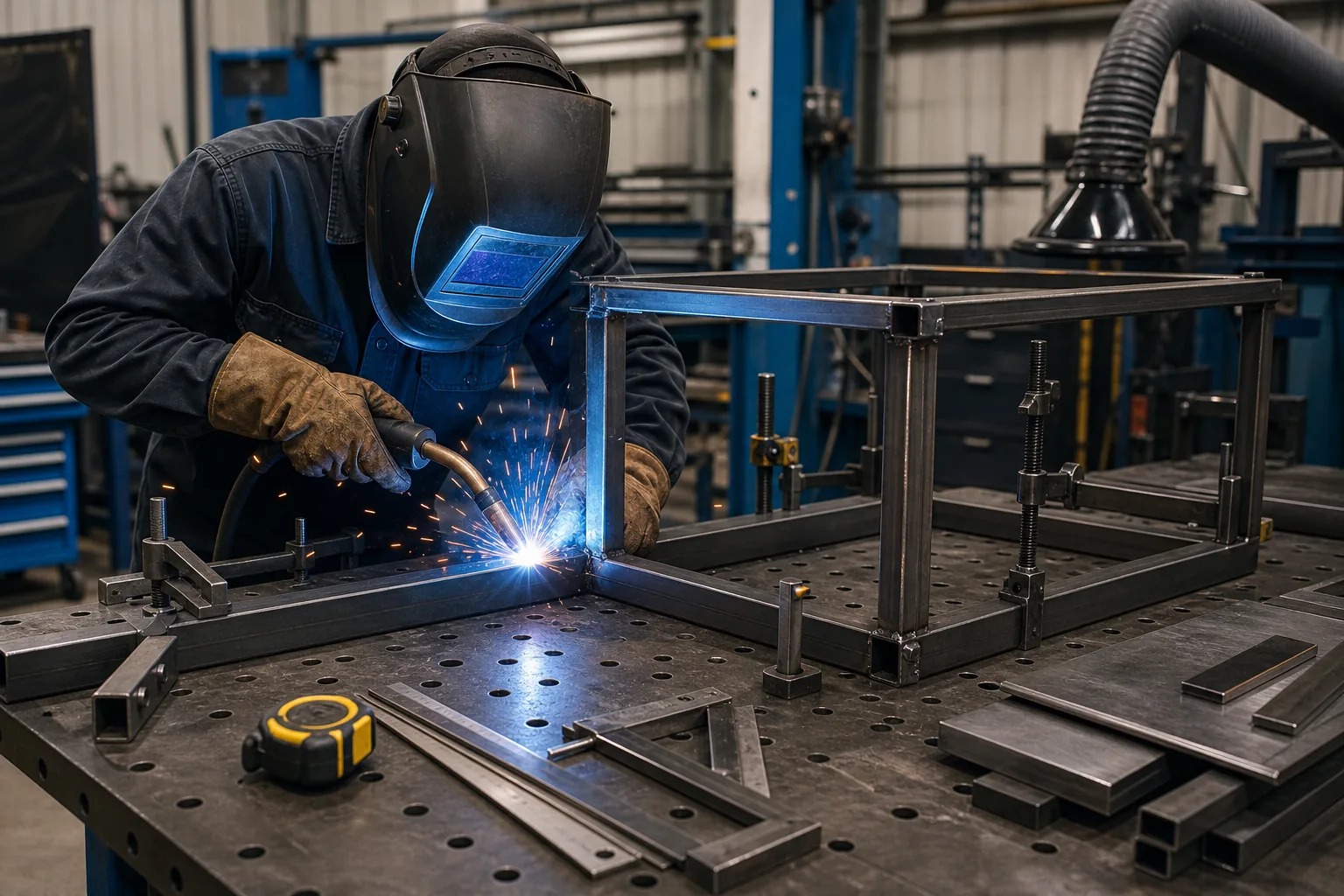
Light fabrication overlaps with sheet-metal work but focuses on complete practical items rather than only formed sheet components. Cutting, folding, drilling, welding, fasteners and coating may all be part of the route. For Sheffield buyers, combining those steps under a defined scope can save time and reduce the risk of receiving unfinished parts that still need modification before use.
What the service can cover
- Small frames, brackets, guards, shelves, trays, covers and general maintenance metalwork.
- Items made from suitable sheet, tube, angle, flat bar and light engineering sections.
- One-off replacements, prototypes, small batches and repeat workplace products.
- Cutting, bending, drilling, welding, fastening and finishing within the agreed scope.
- Development from drawings, measurements, sketches or samples with dimensions confirmed.
- Support for Sheffield workshops, commercial premises and industrial facilities.
Technical points to define before ordering
Turning a sketch into a clear scope
A hand sketch can support a simple enquiry when it includes overall dimensions, material or duty, hole locations, bend direction and how the item is used. Photos should include a scale and show the surrounding equipment. Before manufacture, critical sizes and responsibility for the design must be clear. If the item carries load, protects people or interfaces with machinery, the relevant engineering and safety requirements need to be provided.
Selecting material and construction
Thin sheet keeps weight down but can deflect or vibrate unless folds, returns, ribs or supports provide stiffness. Tube and angle can create a stronger frame while adding joints and finish work. Stainless steel may suit wet or hygienic environments; mild steel can be economical with a suitable protective finish. The selection should follow duty, environment, appearance and budget rather than habit.
Making installation straightforward
Small details often decide whether a fabricated item fits first time. Slotted holes can permit adjustment, but too much clearance may reduce location. Captive nuts can improve access, while removable panels need appropriate fixings and safe edges. Mark left- and right-hand variants, datum points and orientation on drawings. Provide site access, fixing substrate and installation information if fitting is required.
Typical light fabrications applications
The following examples show the kind of commercial requirement that may be discussed. They are not a guarantee that every size, material, certification or deadline is available; the actual job is confirmed after technical review.
- machine and belt guards.
- wall and equipment brackets.
- drip trays and covers.
- small equipment stands.
- shelves and workplace aids.
- replacement access panels.