B2B Casting & Manufacturing · Sheffield

B2B Metal Casting: Aluminium, Steel & More

Made-to-drawing cast components for manufacturers, engineering buyers and trade customers—from one-off replacements and prototypes to controlled repeat production.

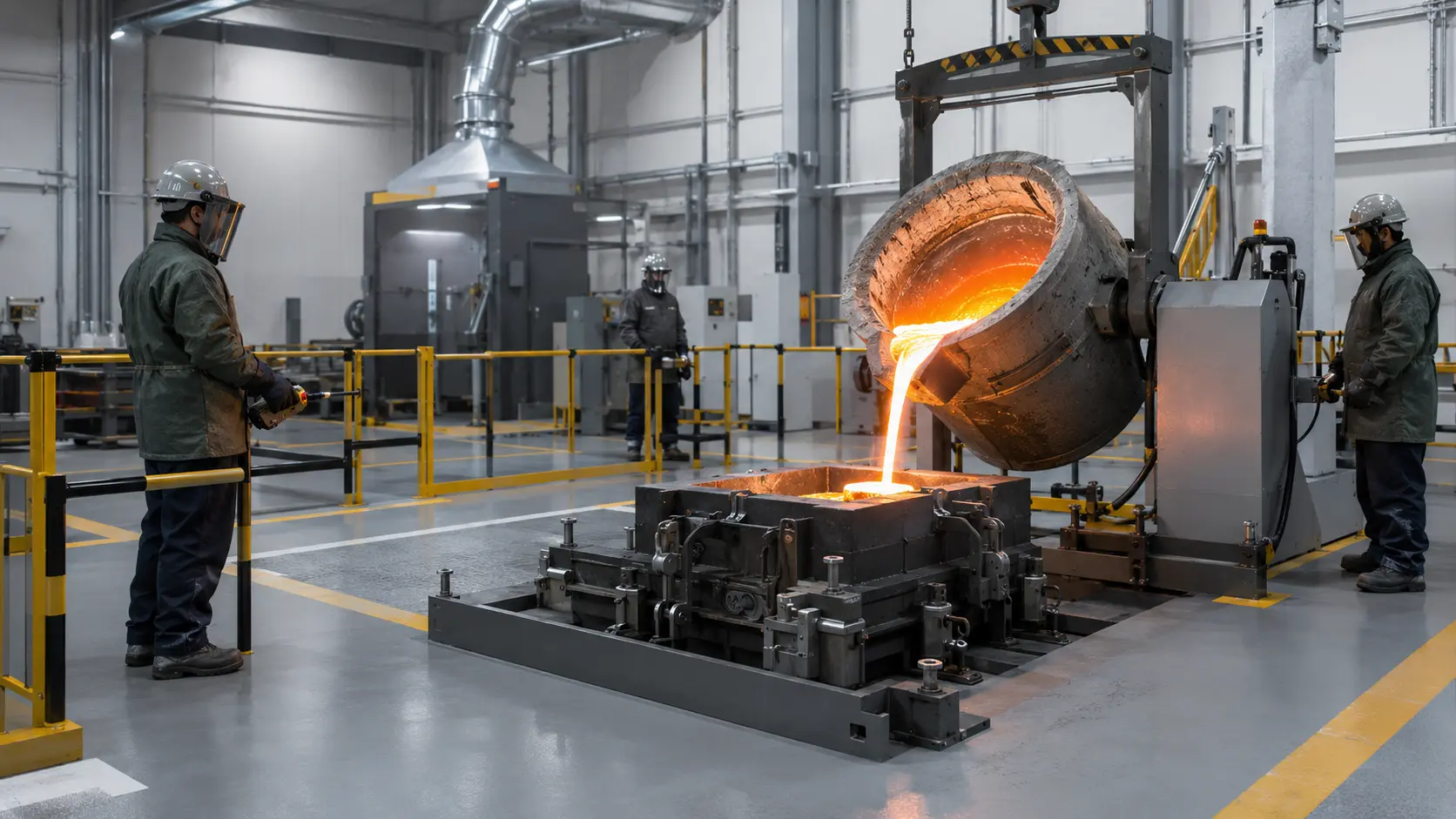
Controlled molten metal casting operation in a clean modern foundry

Service overview

A complete B2B route for cast metal components

We provide B2B metal casting support for UK manufacturers, engineering businesses, maintenance teams, product companies and procurement departments. Supply can cover the raw casting or a finished component, with pattern and tooling development, foundry production, fettling, heat treatment, machining, surface finishing, inspection and delivery brought into one clearly defined quotation.

Projects can begin with a controlled drawing and 3D model, an existing part that needs reproducing, or an early design requiring a casting review. We support one-off replacements, prototypes, pre-production quantities, short runs and repeat batches. The alloy, process, tooling and inspection plan are matched to the component’s geometry, duty, quantity and commercial target.

Our casting scope includes aluminium, carbon steel, stainless steel, grey iron, ductile iron, bronze, brass, zinc and other specified alloys. Sand, investment, gravity die and pressure die casting routes are reviewed against the exact requirement; material grade and capability are confirmed before order.

What our B2B casting service can include

  • One-off replacement castings, prototypes and pre-production development parts.
  • Short runs and repeat production batches made to controlled drawings.
  • Sand casting, investment casting, gravity die casting and pressure die-casting enquiries.
  • Aluminium, iron, steel, bronze, brass and other specified casting alloys, subject to review.
  • New patterns and tooling, modification of suitable existing tooling, and tooling ownership records.
  • Fettling, shot blasting, heat treatment, machining, coating, inspection and delivery coordination.
  • Material certification, traceability and test requirements included where agreed in the quotation.
Metals and alloys

Metal casting by material

Choose the metal around service conditions, mechanical performance, corrosion resistance, weight, production quantity and finishing needs—not appearance alone. We work from recognised grades and confirm the casting route for every B2B project.

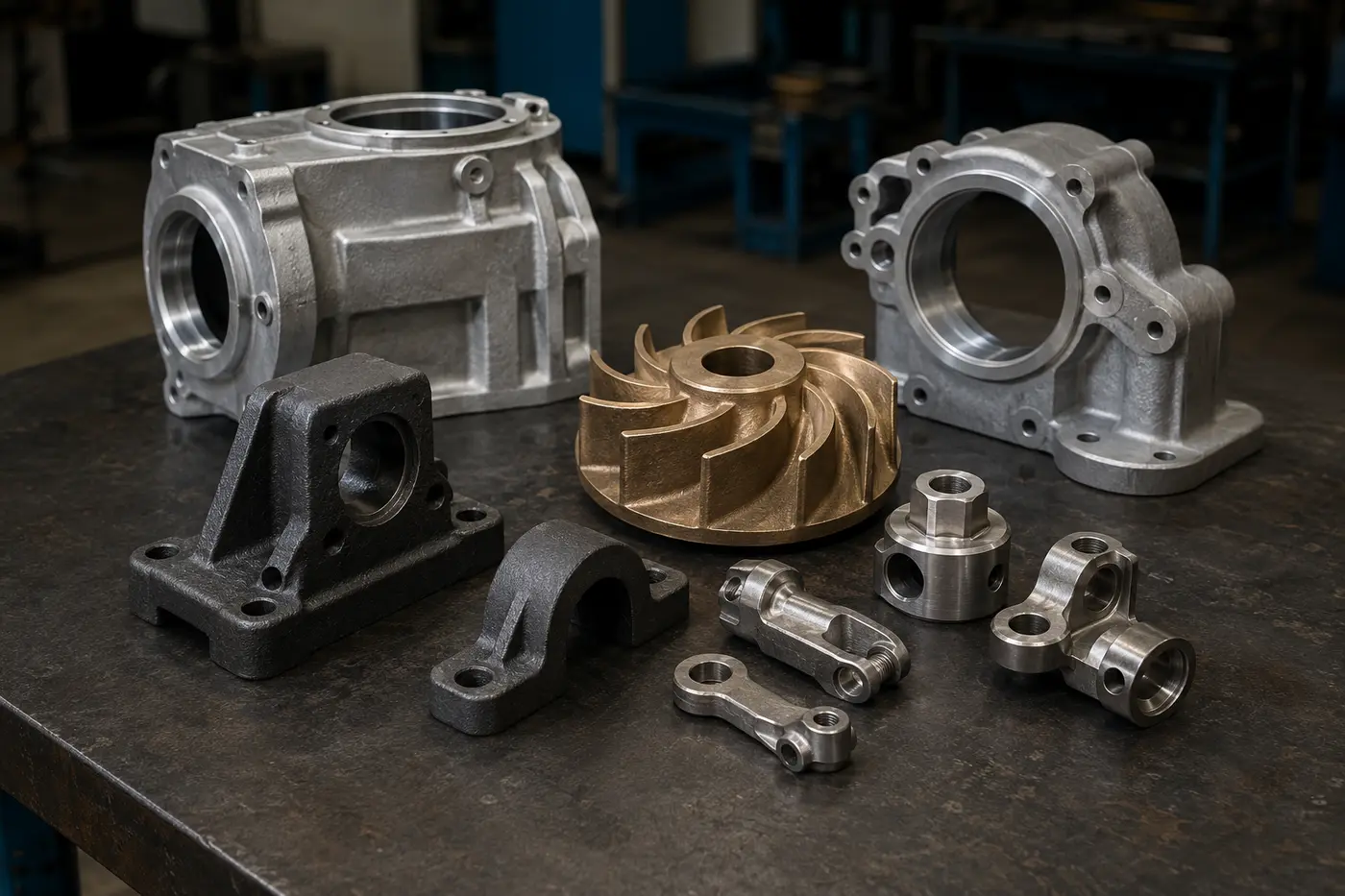
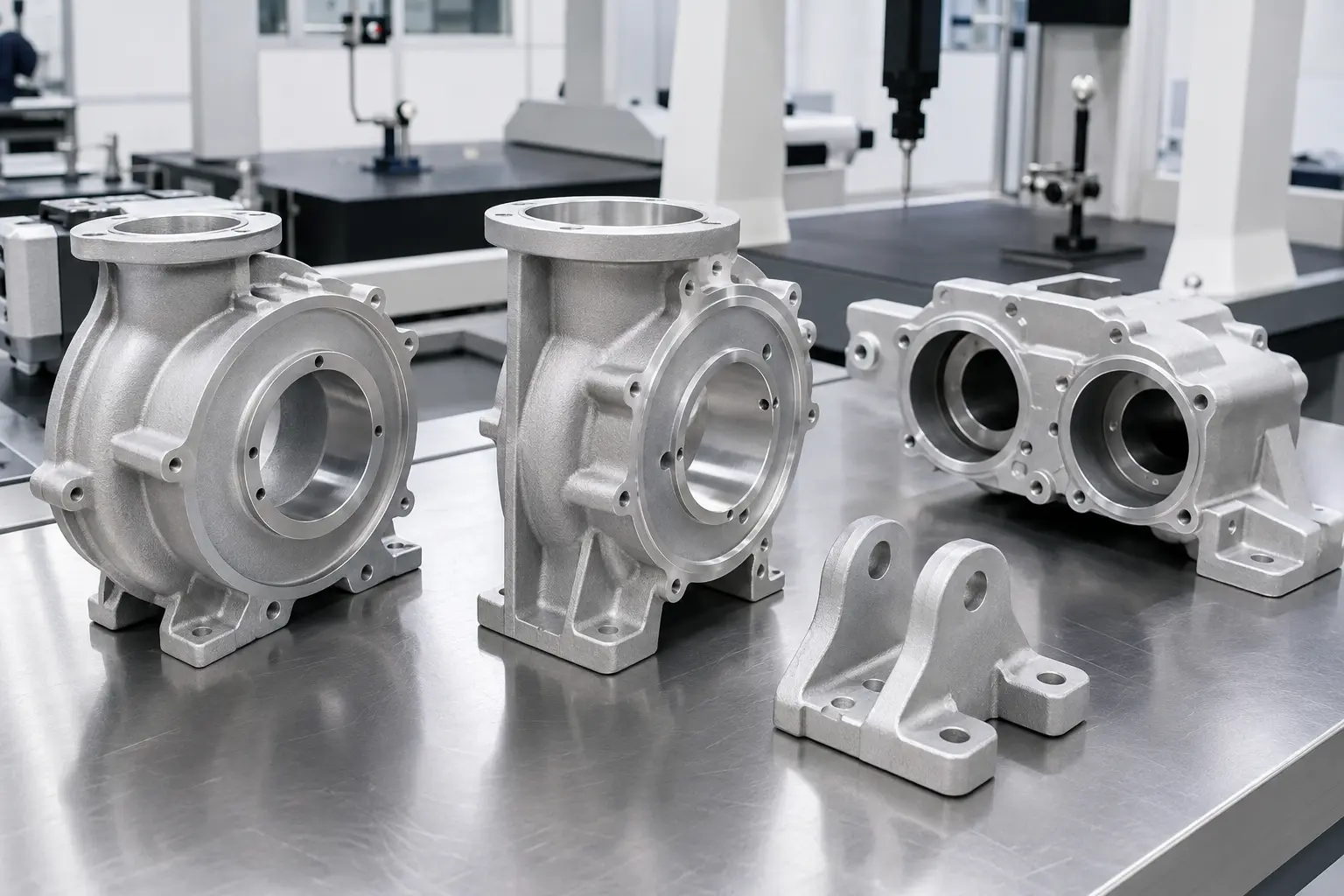
Clean aluminium cast pump housings and engineering brackets prepared for B2B inspection

Lightweight castings

Aluminium casting

Aluminium alloys combine low weight, corrosion resistance and good machinability, making them a strong choice for housings, covers, brackets, heat-management parts, pump components and general engineering products. Sand casting can suit prototypes and lower quantities, while gravity die or pressure die casting may be more economical for repeat demand.

Our B2B supply can include: tooling and pattern review, prototype and production casting, heat treatment where specified, CNC machining, pressure or dimensional testing, finishing and batch documentation.

  • Useful for weight-sensitive parts
  • Prototype to repeat production
  • Machined and finished options
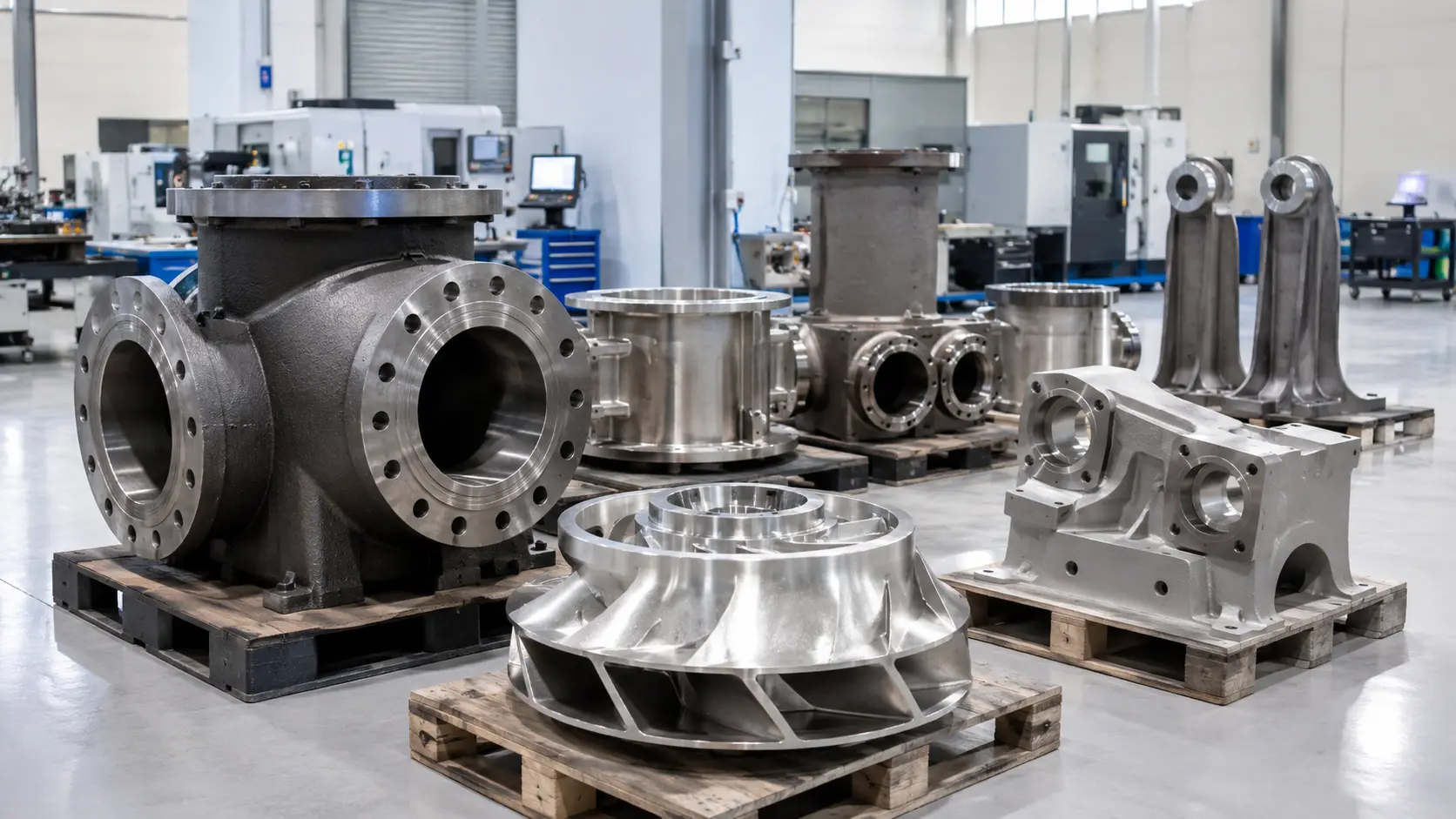
Finished carbon and stainless steel cast engineering parts in a clean industrial inspection area

Strength and demanding service

Carbon steel and stainless steel casting

Cast steel is considered where strength, toughness, impact resistance or high-temperature performance is important. Stainless casting grades add corrosion and oxidation resistance for process equipment, valves, pumps, food-related machinery and exposed components. Investment casting can suit detailed smaller parts; sand casting can suit larger or heavier geometry.

For B2B steel casting enquiries, state the exact grade, heat-treatment condition, weld-repair restrictions, NDT requirements and mechanical test criteria. We can quote machining and documented inspection as part of the finished supply route.

  • Carbon and alloy steel grades
  • Stainless and heat-resistant grades
  • Inspection planned before production

Machines and infrastructure

Grey and ductile iron casting

Grey iron provides vibration damping, compressive strength and machinability for bases, housings, covers, brake components and machinery parts. Ductile iron is selected where greater strength, toughness and impact resistance are needed. Grade, matrix condition and any pressure-tightness requirement should be specified.

B2B scope: replacement castings, production batches, machining, painting, hardness checks and material certification where agreed.

Wear and corrosion resistance

Bronze casting

Bronze alloys are widely used for bushes, bearings, worm wheels, marine fittings, valve parts and components exposed to friction or corrosive conditions. The correct bronze family matters: leaded, phosphor, aluminium and other bronzes have different properties and casting behaviour.

B2B scope: recognised alloy grades, centrifugal, sand or investment routes where suitable, plus machining and inspection.

Fittings and engineered products

Brass and copper-alloy casting

Brass casting can suit valves, fittings, decorative hardware, electrical parts and general engineered components. Potable-water, pressure, dezincification resistance and lead-content requirements must be stated because they affect alloy selection and compliance.

B2B scope: trade batches, machined interfaces, polishing or protective finishing, marking and traceability requirements.

High-volume detail

Zinc and other specialist alloys

Zinc die casting can provide fine detail, thin sections and repeatability for suitable production volumes. Nickel-based, cobalt-based and other specialist casting alloys may also be reviewed where wear, heat or corrosion duty demands them.

B2B scope: process and tooling review against forecast demand, exact alloy specification, finishing, testing and repeat-order control.

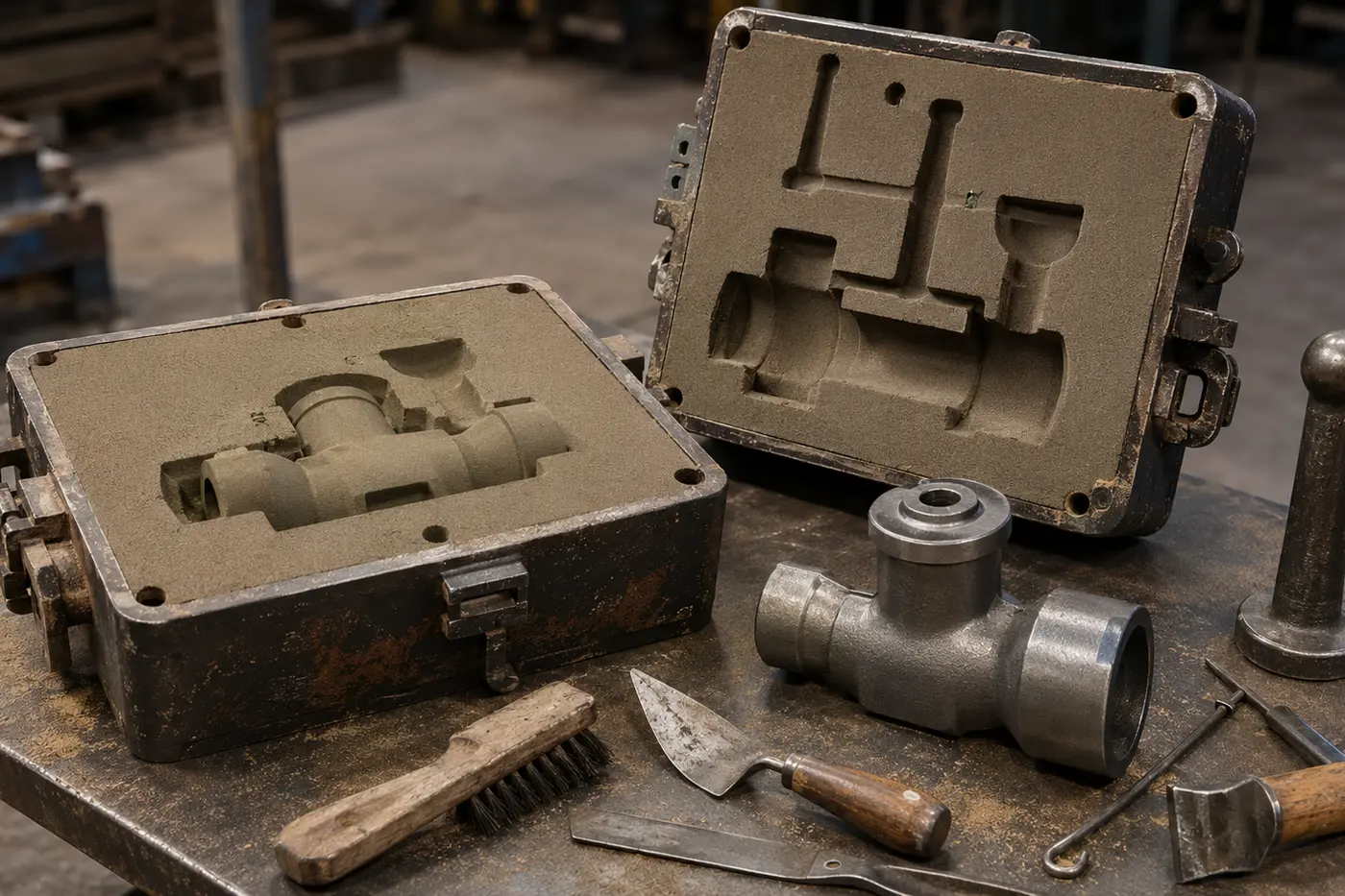
Prepared two-part sand casting mould with runner and gating impressions

Process selection

Sand, investment and die-casting routes

Sand casting uses a bonded sand mould formed around a pattern. It can suit varied sizes, complex external shapes and quantities where permanent tooling is not economical. Core boxes may be needed for internal passages or hollow sections, and the pattern must include suitable draft, contraction and machining allowances.

Investment casting forms a ceramic shell around wax patterns. It is often considered for smaller, intricate components where detail, repeatability and reduced machining are important. Tooling, cluster layout, alloy, section thickness and final tolerance all influence suitability.

Gravity die casting uses a reusable metal mould filled by gravity, while pressure die casting forces molten alloy into tooling at speed. These processes can offer consistent repeat production, but tooling cost and design restrictions mean forecast volume should be stated at the beginning.

Design for manufacture

Turning a component design into a reliable casting

A drawing that describes the finished part does not automatically describe the casting. The foundry route may need draft angles for pattern withdrawal, fillets at section changes, practical wall thicknesses, feeding points, parting lines and extra material on faces that will be machined. Internal cavities may need separate cores. These decisions affect solidification, distortion, surface condition, yield and final cost.

Allow for machining and datums

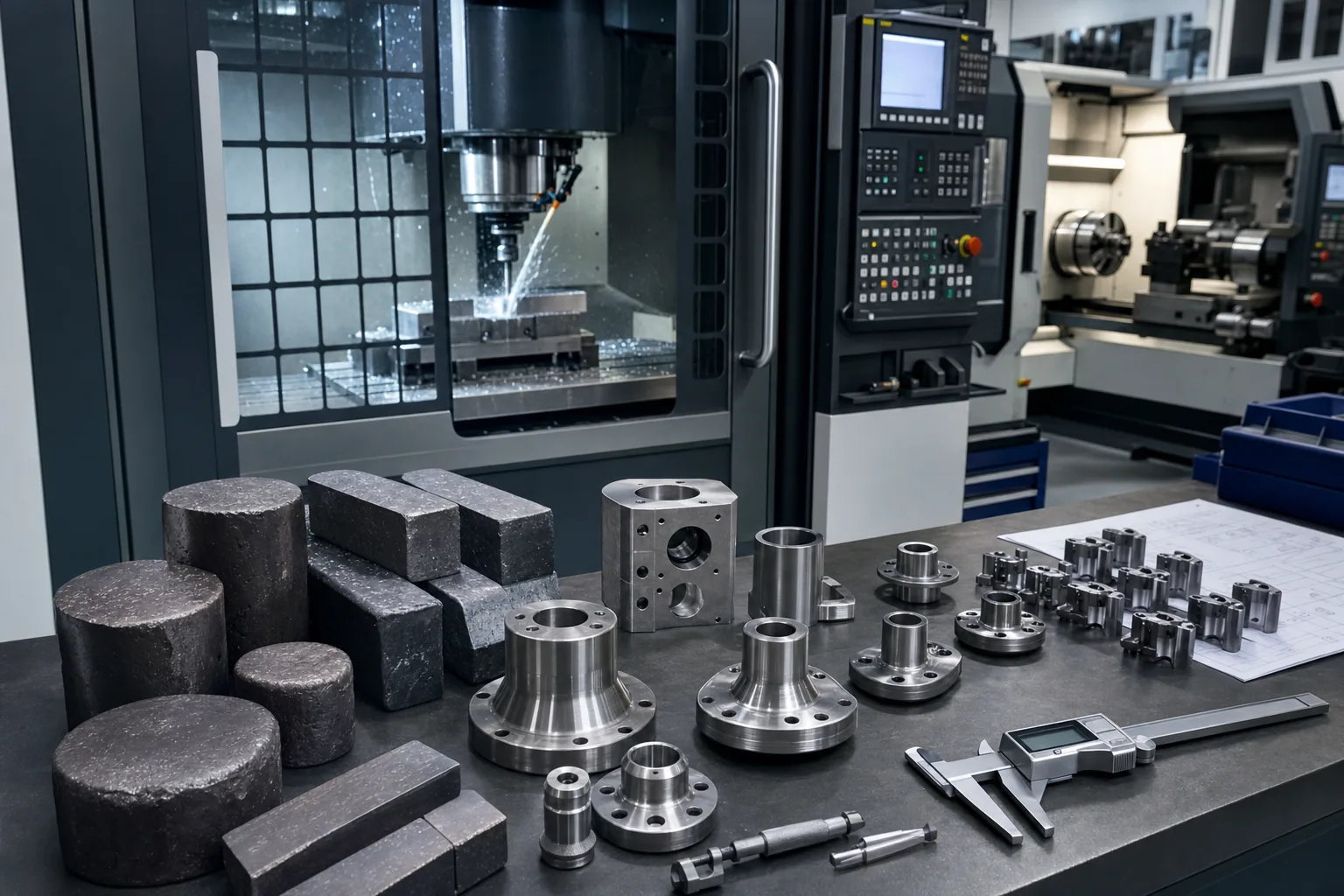
Identify every face, bore and feature that will be machined. The casting must provide enough stock to clean up without creating unnecessary weight or machine time. Datum pads, clamping areas and inspection references should be planned before tooling is released. If a critical bore must align with a cast passage, that relationship deserves specific attention in the model and inspection plan.

Specify performance, not just chemistry

State the recognised alloy designation and the mechanical, corrosion, wear or temperature properties that matter in service. Grey iron, ductile iron, aluminium, bronze and cast steel behave differently during manufacture and in use. Heat treatment may be needed to achieve the required condition. Material substitution should never be assumed from appearance or a generic description such as “cast aluminium.”

Plan inspection before production

Dimensional reports, material certificates, hardness testing, pressure testing, dye penetrant, magnetic particle, radiographic or ultrasonic examination may be relevant to certain castings. The applicable standard, test locations, sampling level and acceptance criteria must be stated at quotation. Inspection added after manufacture can be costly or impossible to evidence correctly.

Cast end products

From raw casting to finished component

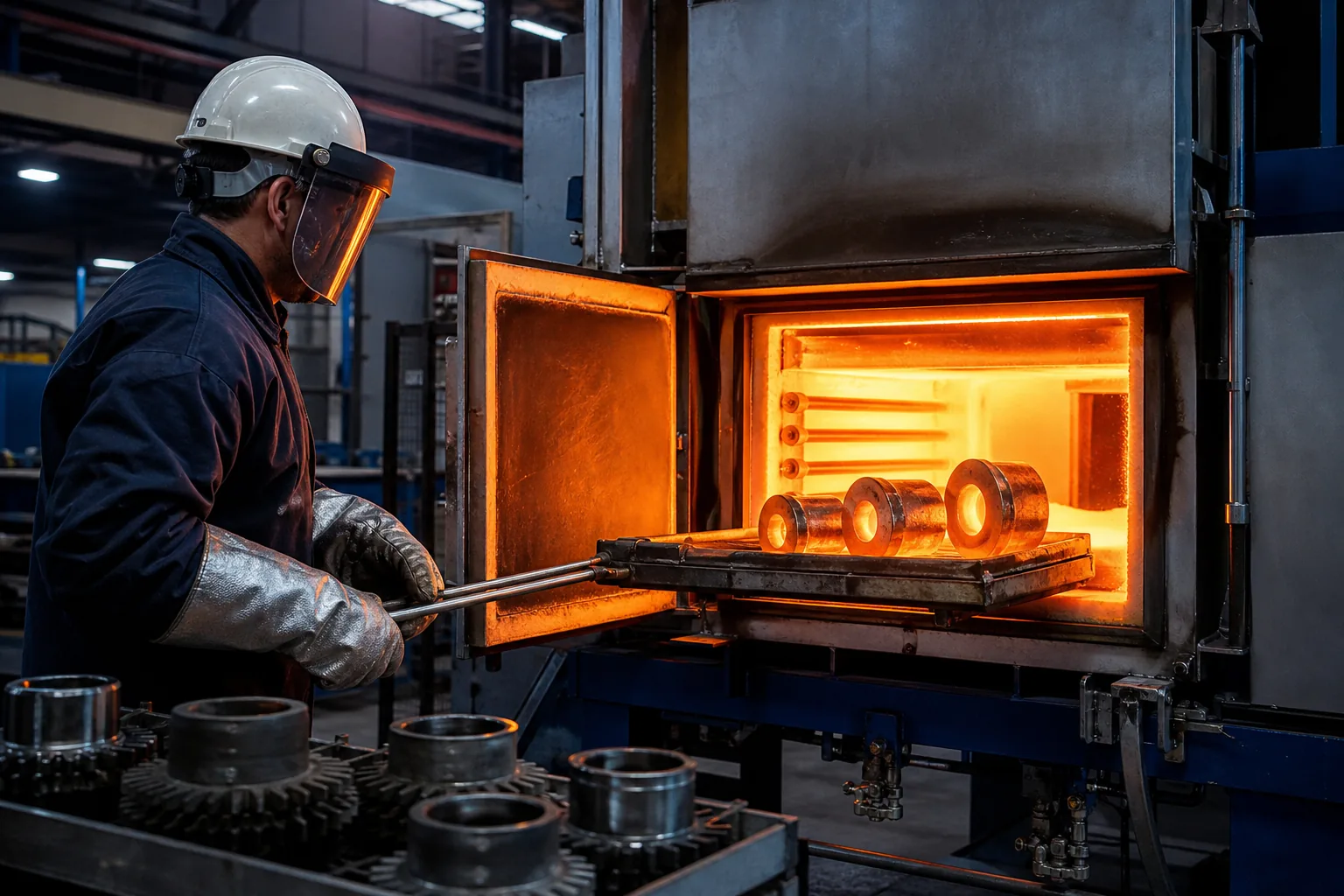
Castings may be supplied in the as-cast condition, but many engineering parts need further work. Gates and risers are removed, surfaces are fettled or blasted, and the component may be heat treated before machining. Bores, sealing faces, threads and bearing locations can then be produced to the controlled drawing.

Typical enquiries include pump and valve bodies, brackets, housings, covers, impellers, pulleys, machine bases, architectural parts and obsolete spares. A component can also receive powder coating, plating or another specified finish after machining and inspection. Where several processes are involved, quoting the full route helps avoid incompatible allowances and repeated transport between separate suppliers.

For replacement parts without current drawings, provide the original component, clear photographs, service conditions and any known material information. Reverse engineering can be discussed, but responsibility for dimensions, design validation and fitness for service must be agreed before manufacture.

Finished aluminium, iron, bronze and stainless cast engineering components

A controlled supply route

How a metal casting project moves forward

  1. Define the requirement. Share the current drawing, 3D model, material grade, quantities, finish, inspection needs and target delivery date.
  2. Review the casting method. Geometry, alloy, volume, tooling budget and downstream work are considered together.
  3. Agree tooling and approvals. Confirm pattern or die scope, ownership, storage, expected life, drawing revision and any first-off approval.
  4. Produce and finish. Cast, fettle, treat, machine and finish the components to the agreed route.
  5. Inspect and deliver. Complete the specified checks, compile agreed records and arrange delivery to the Sheffield site or purchasing location.

Information to send for a casting quotation

A technically complete enquiry produces a more dependable price and lead time. Send a dimensioned PDF drawing and, where available, a STEP or other suitable 3D model. Include present quantity, likely repeat demand and annual usage because these figures can change the most economical process.

  • Drawing number, revision and 3D model.
  • Recognised material grade and applicable standard.
  • Prototype quantity, batch size and expected annual demand.
  • Critical dimensions, tolerances and machined surfaces.
  • Surface finish, coating, heat treatment and colour.
  • Testing, certification, traceability and marking requirements.
  • Delivery postcode, packaging needs and required date.

Local industrial supply

Serving Sheffield and South Yorkshire

Sheffield’s long association with steel, metals and engineering continues through advanced manufacturing, maintenance, construction, energy, process equipment and specialist product businesses. Casting enquiries can be considered for companies across the Lower Don Valley, Attercliffe, Darnall, Tinsley, Handsworth, Meadowhall, Ecclesfield and Chapeltown.

The local service area also includes suitable B2B enquiries from Rotherham, Barnsley, Doncaster, Chesterfield and Worksop. Include the delivery postcode and unloading requirements so transport, packaging and timing can be addressed in the quotation.

Connected processes

One enquiry for the finished requirement

Castings often sit at the start of a longer manufacturing route. Machining allowances influence pattern design; heat treatment can affect dimensions; and coatings may require masking or a specific surface preparation. Sending the finished specification early allows these interfaces to be reviewed together.

Capability, material availability, tooling, certification and lead time are confirmed for each project. The page is a practical starting point for Sheffield engineering buyers, not an automatic promise that every alloy, size or approval is available.

Helpful answers

Metal Casting Sheffield FAQs

Final process, material, capability, price and lead time are confirmed against the individual enquiry.

Which metal casting process should I use?

The suitable process depends on alloy, part size, geometry, surface requirements, tolerances, quantity and tooling budget. Send the drawing and expected volumes so sand, investment, gravity die, pressure die or another route can be reviewed.

Can small batches and one-off castings be quoted?

Yes, one-off replacement parts, prototypes and small batches can be reviewed. Sand casting or additive-manufactured patterns may reduce initial tooling, but the best route depends on the component.

Can cast components be machined and finished?

Machining, heat treatment, shot blasting, fettling, coating and inspection can be included when specified. Machining datums and allowances should be agreed before the pattern or tooling is finalised.

Which casting materials can be considered?

Enquiries may include aluminium alloys, grey or ductile iron, carbon and stainless steels, bronze, brass and other copper-based alloys. Availability and process suitability are confirmed against the exact grade and specification.

Do you support metal casting customers in Sheffield?

Yes. The service is focused on B2B casting enquiries from Sheffield, South Yorkshire and surrounding industrial areas, with UK-wide supply considered where suitable.

Related services

Complete the manufacturing route

Plan machining, heat treatment and finishing at the same time as the casting so allowances and quality requirements remain compatible.

Sheffield B2B casting enquiries

Discuss your metal casting requirement

Call 07864 286692 or email the drawing, alloy, quantity, finish, delivery postcode and required date.